It was described as a “wonderfully, warm-hearted romance” by RogerEbert.com, and it’s not hard to see why audiences and critics alike loved the 2025 film ‘A Nice Indian Boy’, starring Karan Soni, Jonathan Groff and comedian Zarna Garg. It’s a reminder to the industry at large that stories that don’t necessarily follow typical romance formulas, by choosing a diverse cast and a queer couple at the center, can be just as enticing and even more necessary in the current political landscape.
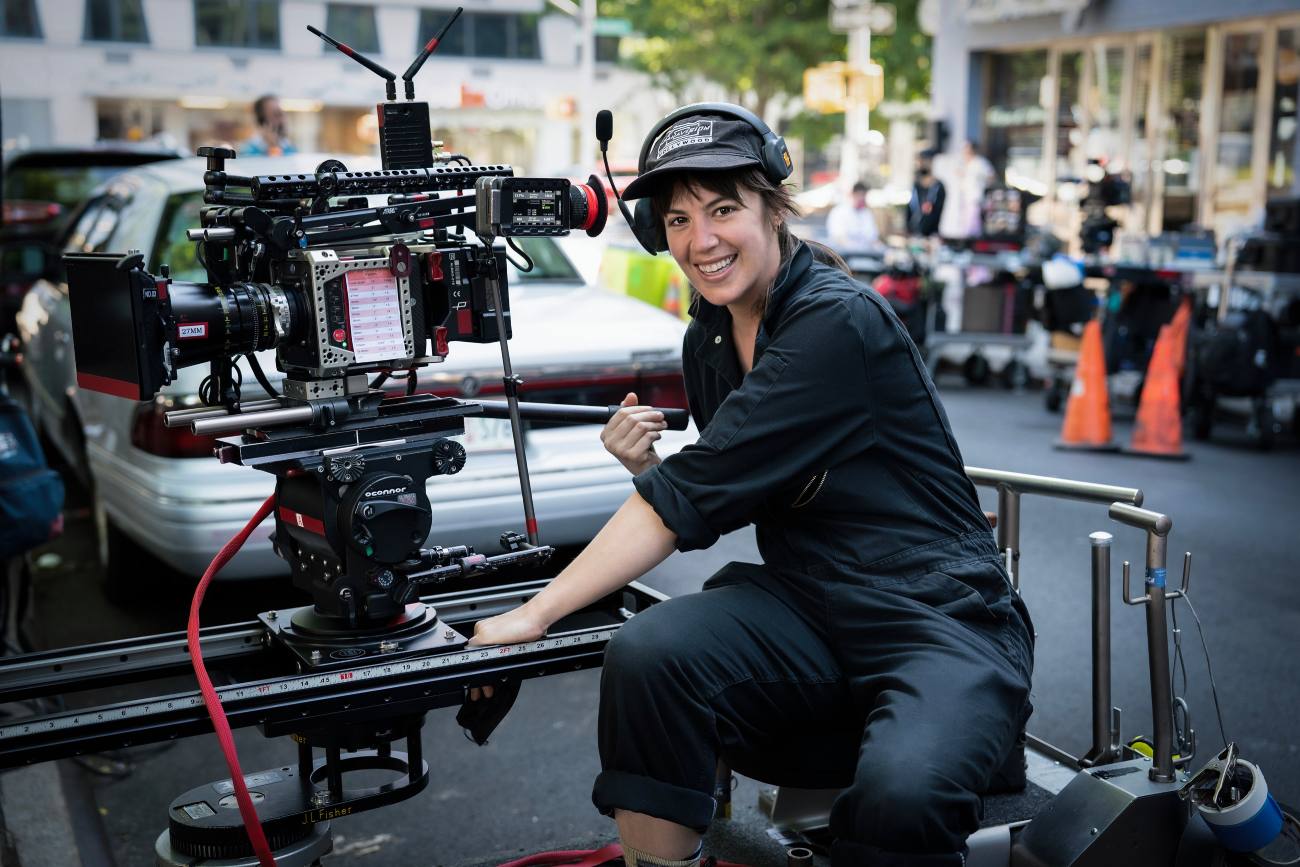
What we see on screen is a direct reflection of the decisions that get made behind the camera, well before the first day of shooting, and ‘A Nice Indian Boy’ is a testament to great leadership of the production team, including Line producer Amanda Verhagen.
On a feature film, a line producer is often considered the senior manager responsible for the physical production, budget, and daily operations of a film, television, or commercial project from pre-production to wrap. They also hire crew, negotiate with vendors, and manage on-set logistics to ensure the project is completed on time and within financial limits.
They have a lot of power to determine the kind of culture that cast and crew will experience on set, and for ‘A Nice Indian Boy’, Amanda made intentional choices to create an environment that honored the film’s queer and South Asian storytelling elements, while also handling the logistical backbone of the production. She made intentional choices in crew composition and on‑set culture that elevated the authenticity and emotional safety for the entire team.
We’re so used to hearing excuses about the lack of diversity and safety on set in Hollywood, that it was refreshing to speak with Amanda about the thoughtful leadership she brings to every project she works on, and how that reflects on screen. Also, we are OBSESSED with her TikTok account where she brings humor and heart to her glimpses of life on set and behind the camera!
In addition to ‘A Nice Indian Boy’, her credits include indie and genre titles like ‘Love Me’, ‘The Dead Don’t Hurt’, ‘It’s a Wonderful Knife’, and ‘Cold Copy’. We wanted to learn more about what it takes to combine a people‑first leadership production strategy with creative storytelling. Read our interview with Amanda below where she gave us a behind‑the‑scenes look at indie production challenges, team dynamics, and the role of intentional leadership in crafting cinematic worlds.
Where did your producing career first begin?
Like a lot of young producers, I started my career thinking I was going to be a glamorous producer, juggling financing big Hollywood movies, having lunch with movie stars, while struggling with the difficult decision of which of my luxury cars to drive to the lake house this weekend.
Obviously, that’s not reality for most of us. I learned through trial and error that there are many different kinds of producers, and finding the intersection between what you’re great at and what you enjoy doing is the key to lasting success.
I started as the “everything producer”, handling script development, financing, casting, production, and even sometimes craft services. I quickly realized I can’t do it all alone, and I need to add more and more folks to the team who specialize in each area and skill.
It was both a relief and a disappointment on my first line-producing job, ‘Corrective Measures’ for Tubi, where I learned that I actually really love production and am not as good at the rest of it. I had been brought in by a friend of mine who saw how logistically smart I was, and she knew they needed someone to helm the ship. After this, I let go of the idea of spending my days in script revisions and sales calls.
Can you break down what a producer does, and especially what a line producer does, for those who may not be familiar?
This is always a great question, as some films may not have the luxury of having a line producer, or it may be a combination role with the production manager, so it can get confusing.
In Canada, I am the person that the studios and production companies from other countries call when they want to shoot here and have their script and financing ready, but need someone to handle production.
In the simplest terms, I have to be so good at my job that they can meet me, know they can trust me with tens of millions of dollars, and that I will spend it correctly and make the best movie possible for them.
Every dollar you spend is a creative decision. Every crew member you hire is a creative decision. Although the job may seem like numbers and logistics, it has a profound impact on the film as a whole.

Line producing is not just the nuts and bolts of a project coming together, and you have shown that thoughtful and intentional leadership can be part of the job. Can you talk about how you have incorporated this into your projects?
I consider myself in service to the production and my team. My number one job on a film is to ensure the physical and emotional safety of the cast, crew, and public. In previous years, there was not as much thought put into either of these elements.
The only way to serve my team is to lead calmly and by example, forgive mistakes, and collect information. I spent ten years as a Production Coordinator for many big TV series and films, where I watched crew panic when things went wrong. They were worried about employment and reputation repercussions, and stressed about a lack of contingency and foresight.
People do their best work when they feel they are able to openly express issues, opinions and ideas. This emotional safety is paramount. We create trust amongst our crew quickly through a few ways, such as conscious hiring practices, where we focus on finding great personality fits. Or as we call it, “attitude over experience.”
Additionally, there are resources we can provide to cast and crew, such as mental health coordinators when we are shooting with difficult subject matter or locations, subject experts and consultants for sensitive topics, or simply adding pronouns to call sheets.
With so much of the arts and media world reeling from funding being taken away under the Trump administration, can you share your thoughts on why making art under these types of circumstances is more important than ever?
The arts are more important now than ever. As a means for people to escape from their day and express themselves. Throughout history, artists have always found a way to continue to create. Resourcefulness and unconventional thinking will lead to new paths to audiences and funding.
There is a global community of filmmakers looking to collaborate and learn from each other. Now is the time for folks to expand their reach and try new paths.
@notableamanda IN THEATRES THIS WEEKEND. #filmtok #filmmaker #movieproducer #makingmovies #femaleproducer #southasian #queer ♬ original sound – Amanda | Film Producer
As someone whose role focuses a lot on the budget of a project, can you talk a bit about the intentional decisions that producers can make to ensure a project is diverse, inclusive, and doesn’t just perpetuate the “good old boys” Hollywood status quo?
From a budget level, line producers can be conscious of adding training positions, internships and shadow positions, where available. However, diversity in a film truly comes from a standard a producer sets and maintains for their heads of departments.
At my company, Notable Studios, we have always strived for at least a 35% BIPOC, queer, or female crew base, but have never been below 55%. This is due to personal conversations I have with every head of department about expanding their reach in hiring. I may have control over what leads we hire, but their team is ultimately up to them.
By taking the extra time to emphasize my company culture and clear expectations, the teams rise to the occasion, and the productions are better for it.
Working on ‘A Nice Indian Boy’ as a Line Producer, can you talk about some of the ways you created an inclusive culture on set and how it honored the project’s South Asian and queer storytelling elements?
‘A Nice Indian Boy’ is a Queer South Asian Rom Com, with two weddings and a dance sequence. It’s a lot of movie to pack into an hour and 39 minutes. I knew we had to approach it differently.
As described by our crew, this was the ‘gayest set ever.’ I wanted to ensure that our cast (Karan Soni and Jonathan Groff) and director Roshan Sethi felt completely comfortable on set to express themselves. That meant hiring from the queer and south asian community whenever possible.
Additionally, a lot of our team had never been to a Marathi wedding before, so we sought out expert Indian wedding planners as consultants and used actual clothing makers from India for the Kurtas.
Authenticity was an important tenet, even with a comedy. Our team went above and beyond for every detail, including finding a real Hindu Temple to shoot in and working with South Asian artists for the art gallery. When I can make the team feel safe and encouraged to do their best work, they never stop impressing you.
@notableamanda More women on top 💋. #filmtok #filmmaker #movieproducer #makingmovies #femaleproducer #womeninfilm ♬ original sound – mads mitch
Why does representation behind the camera matter as much as what we see on screen?
Every person working behind the camera makes a thousand tiny decisions that add up to the story the audience experiences. There is so much more to films than the actor and director.
For example, people underestimate the impact of Location Managers, who set the backdrop for the film and often influence the entire color palette. Or Costume Designers, whose looks go on to become so iconic that children are now using them as Halloween costumes.
If the team doesn’t represent the world around us, then the film won’t either, and the audience will struggle to connect. You never know where your next best idea is coming from, and the voices in the room matter. Whether it’s the PA or the department head.
Working on a number of indie projects, while the budgets may be different from those of a major studio blockbuster, what are the advantages of an indie in terms of trying new things or breaking the industry “rules”?
Indie Films tend to be more director-driven, as they have fewer stakeholders than a major blockbuster that are in the approval chain. The director and creative team are able to take more risks; however, they have fewer resources to do it with, as the budgets are lower. Nevertheless, often the best ideas come from a limited budget and scale.
What are you working on next, and what do you hope you will continue to be known for throughout your career as a Producer?
I just wrapped two films that I am buzzing with excitement about: Jon Turteltaub’s ‘The Best is Yet to Come’ with Matthew Broderick and Alan Rick, and Jane Shoenbrun’s ‘Teenage Sex and Death at Camp Miasma’ with Gillian Anderson and Hannah Einbinder.
Both of these films are completely different, but are also such great movies for the world. We need more films about male friendship and vulnerability, and more films showing women’s strength against impossible odds.
All I can hope for in my career is to continue to be lucky enough to make movies with talented and kind folks like these. Every time I get to make a movie, it is a gift. I can’t believe my absolute favorite thing to do in the world is my job, and I get to lift folks up with it. How lucky am I?
You can watch ‘A Nice Indian Boy’ available online and on demand now. Follow Amanda Verhagen on Instagram and TikTok to follow her career and see the productions she is working on next.
@notableamanda DISCLAIMER; I am not a beauty influencer. I am however an award winning film producer who has had features play Sundance, Cannes, TIFF, you name it! I have multiple films in theatres around the world now. So maaaaaybe I know a little about filmmaking. Just a little. And I want you to as well. So don’t look at my mismatched foundation. But do try out my advice. #filmtok #movieproducer #seeyouontheredcarpet #filmproducer #🎬 #fyp ♬ Chill and gentle lo-fi/10 minutes(1455687) – nightbird_bgm