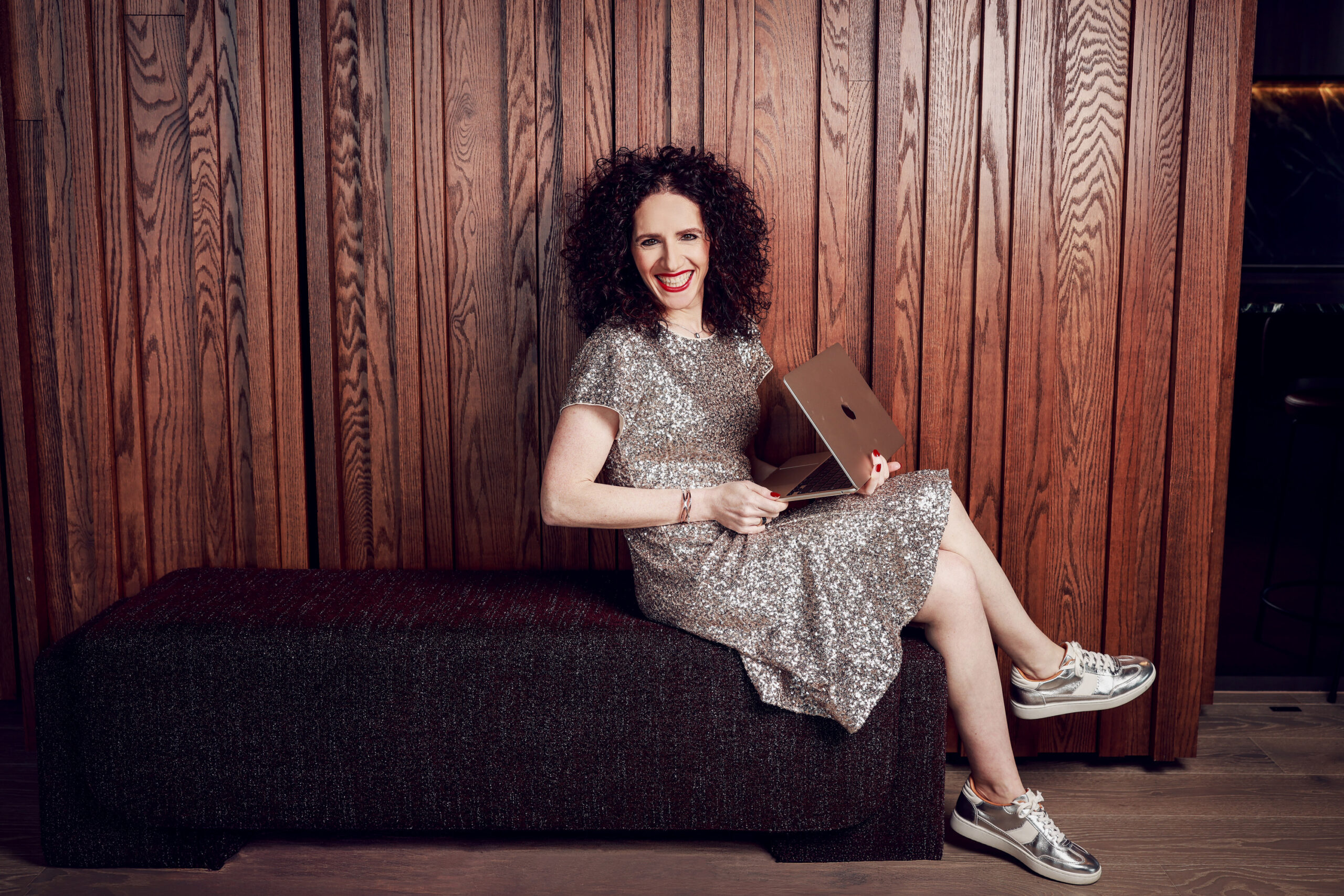
In her new book, ‘The Wardrobe Project’ (Wiley, 26 Nov 2025), financial behavior specialist Emma Edwards, founder of The Broke Generation, shares her radical experiment: a whole year without buying a single item of clothing. No new outfits, no second-hand finds, not even rentals. What began as a no-buy challenge soon became a powerful lesson in self-worth, resilience, and the surprising freedom of living with less. In the exclusive excerpt below, Emma shares how meeting her ‘fantasy self’ showed her why her wardrobe didn’t work, and what really did:
Fashion is about conveying who we are. But what happens when you’re not actually happy with who you are? What are you expressing when you identify as someone who isn’t good enough? When you exist in a body that society considers wrong?
There’s really something to be said about taking away your vices. A wise friend of mine always says: ‘When you take away your vices, what you’re left with is your life.’
Cutting off access to new clothes left me with nowhere else to look for validation, dopamine, novelty, confidence or the currency of self-esteem but myself-and that really taught me the meaning of what my friend meant. When I took away my source of confidence, what I was left with was a clear picture of just how much I was relying on outsourcing my identity to consumption.
While I was finding a solid (and surprising) amount of enjoyment from my existing wardrobe, I’d begun to notice the pieces I reached for more than others, the ones I avoided and the ones that told the most important stories. I was living out the 80/20 rule, realizing how much easier it was to reach for the same 20 per cent of my wardrobe over and over again.
Generally, my 20 per cent consisted of the ‘better’ purchases in my wardrobe: the things that fit fairly well, that were purchased more neutrally or out of necessity, or sometimes just random luck. A dress I’d got on sale and unexpectedly worn to death. A great blazer that worked with almost everything.
But when I dared to examine the 80 per cent, which you’re kinda forced to when you commit to the Project, that’s where it got interesting. There was one factor that united so many of my wardrobe mistakes: I was buying for somebody I’m not.
She wasn’t me
When I stood back and looked at what my wardrobe was telling me, what those lesser-worn pieces had in common, what the almost and the strangers and the alter egos shared, I saw a life I didn’t lead, a body I didn’t have and a style that I’d copied off Pinterest.
My fantasy self would wear sleek tapered trousers and matching jackets. She’d trot about in heels, light on her feet and dainty in her movements. She’d have shiny, glossy hair that was never out of place. She’d show off her long, slim legs in high-waisted skinny jeans and a crisp white shirt with a low messy bun. She wore basics with such elegance. Impeccable posture, flawless jaw line. Feminine. Elegant. Polished.
For all the things she was, there was one thing she wasn’t: me. None of the things I admired in her stemmed from anything I truly was.
I was starting to see how my entire relationship with clothes was fractured. How I was erasing myself, rather than embracing myself.
When clothes become your way of hiding your flaws and trying to be who you think you should be, you’re left conveying everything you’re not. This incongruence is bound to be uncomfortable, and I was realising I’d felt that discomfort for most of my life.
The outfit in my head vs on my body
A big way my fantasy self played out in my buying habits and style choices was this constant disconnect between outfits in my head versus outfits on my body. The image of my fantasy self was so strong that I could conjure up an image of what I wanted to look like in an outfit so easily. I’d then replicate that, either with clothes from my existing wardrobe or clothes I was buying, and instantly be disappointed.
Oftentimes I’d try to force it, convince myself that I did look like the image in my head, try to shove confidence in the way I looked down my own throat, but something always felt off. I was so familiar with this huge gap between what I’d tried to look like and what I’d actually looked like that it felt as though style was this game of moving goal posts.
I think this disconnect comes down to a few things. First, glossy images on product pages and social media. When these images triggered my desire to imitate my fantasy self, I’d slide into the vortex of buying and expecting the product to look like that on me.
Second, I think, as women, we’ve actually been conditioned over many years to see a distorted view of ourselves at any given time. When we don’t really see ourselves, we can’t really know ourselves. And that’s why our fantasy self provides such psychological comfort in many ways, because we can easily see them represented in the media we’re consuming and the lives we’re admiring. It’s almost easier to pretend to be someone else than it is to meet who we really are.
Meeting my fantasy self was a necessary but somewhat painful step on my journey. While I’d started to unlock the mistakes I’d been making, I wasn’t quite sure where to go from there. I had ten months to go and a wardrobe filled with things I suddenly saw in the cold light of day as entirely wrong for me. If I was going to start dressing in a way that expressed my real self, I needed to get to know who that really was.


Edited extract from ‘The Wardrobe Project: A year of buying less and liking yourself more‘ by Emma Edwards (Wiley), available 26 November at all leading retailers. Follow Emma and her company The Broke Generation on Instagram and Facebook for more insights, and subscribe to their Youtube Channel.